Red Light Therapy for Eczema: Does It Actually Work?
An honest, evidence-based look at what red light therapy can (and can’t) do for eczema – the science, the real studies, how to use it, and the devices worth considering.
 Key takeaways
- Red light therapy (red 630-660 nm + near-infrared 830-850 nm) is a promising, low-risk option for calming eczema, but it’s not a proven cure, and human evidence is still limited.
- The mechanism is sound: it targets the three drivers of eczema: a leaky skin barrier, an over-reactive immune system, and itch.
- The best human trial so far used blue light and found modest, real improvements in itch and severity; a small near-infrared study reported larger itch reductions.
- It is not the same as medical UVB phototherapy (the dermatologist-supervised gold standard). Red light is non-UV and safe at home.
- Best for mild-to-moderate eczema, used alongside good moisturizing and trigger control. Talk to your dermatologist if yours is severe.
If you’ve been fighting eczema for years and standard creams only get you so far, you’ve probably wondered whether red light therapy is worth a try. Here’s the honest answer, backed by the actual research, with no hype and no invented statistics.
What eczema actually is (and why it’s so hard to treat)
“Eczema” usually means atopic dermatitis: a chronic, relapsing, inflammatory skin condition that affects up to about 1 in 5 children and roughly 1 in 10 adults, with rates rising for decades (review).
It helps to see eczema as three connected problems, because that’s what any treatment – red light included – has to work against:
- A broken skin barrier. Many people with eczema carry mutations in the filaggrin gene, which weakens the outer skin layer so it leaks moisture and lets in irritants and allergens.
- An over-reactive immune system. Eczema is “Th2-skewed”: cytokines like IL-4, IL-13, and IL-31 run high. IL-31 is nicknamed the “itch cytokine”, and it’s the same pathway biologics like dupilumab target.
- Itch and infection. Scratching damages the barrier further, and the raw skin gets colonized by bacteria: over 90% of people with atopic dermatitis carry Staphylococcus aureus, and the amount tracks with flare severity (review).
Standard care (moisturizers, topical steroids, and for severe cases systemic drugs or biologics) helps many people but doesn’t fully control symptoms for a lot of them. That gap is exactly why people go looking for options like light therapy.
Real Results
Before & After: Real User Photos
Photos shared by real users showing how red light therapy helped their eczema. No stock photos, no filters. Individual results vary.
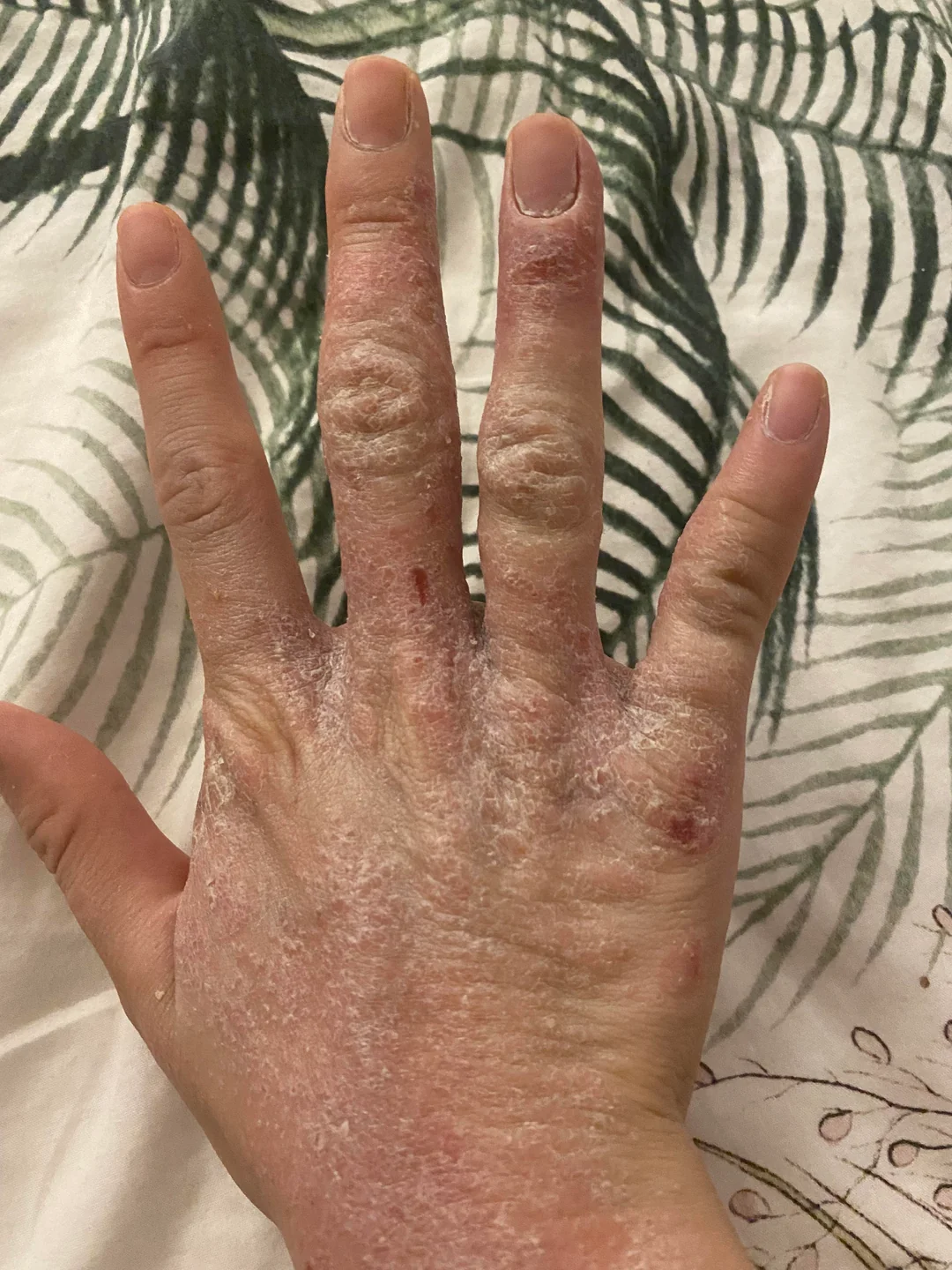 Hand · 8 Weeks
Hand eczema calmed over 8 weeks
Daily short sessions plus a ceramide moisturiser routine after years of flaring.
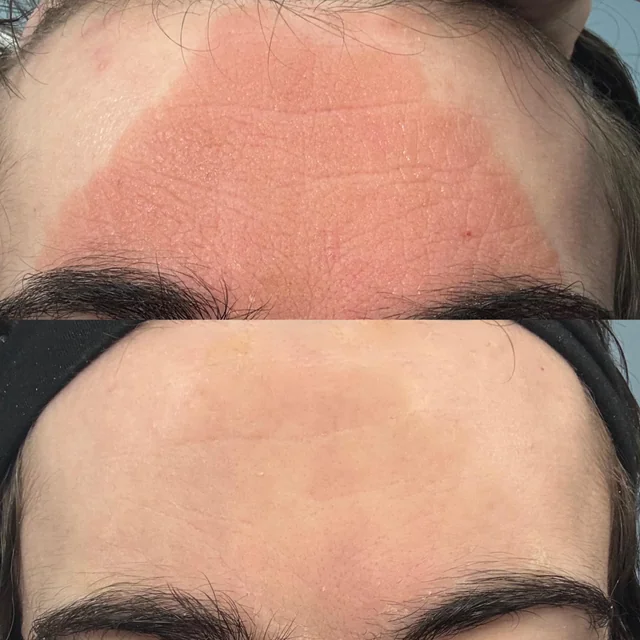 Face · 1 Week
Forehead patch calmed in ~1 week
A fast-response case; the burning sensation eased within days.
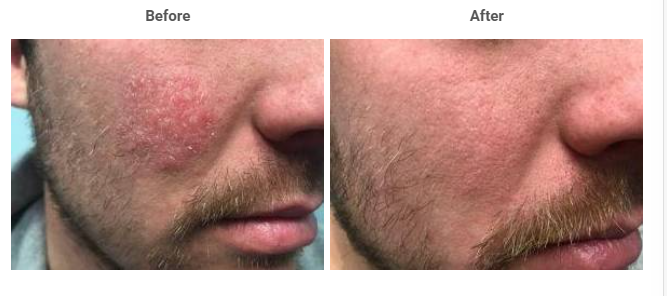 Cheek
CheekCheek eczema, RLT + azelaic acid
Combined with a gentle routine over several weeks.
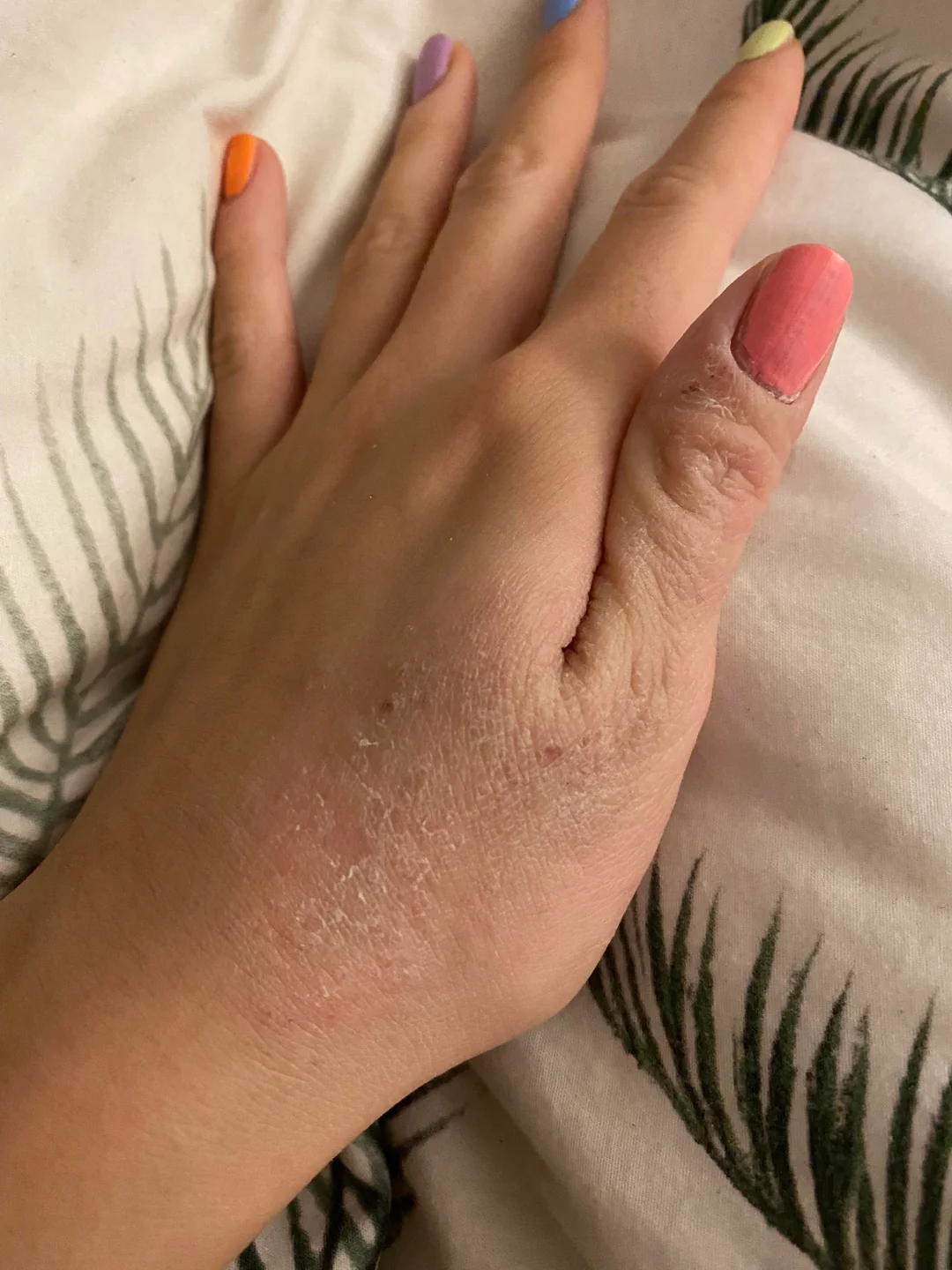 Dyshidrotic · 3 Mo
Dyshidrotic hands, 3-month routine
With cotton gloves at night and fragrance-free emollients.
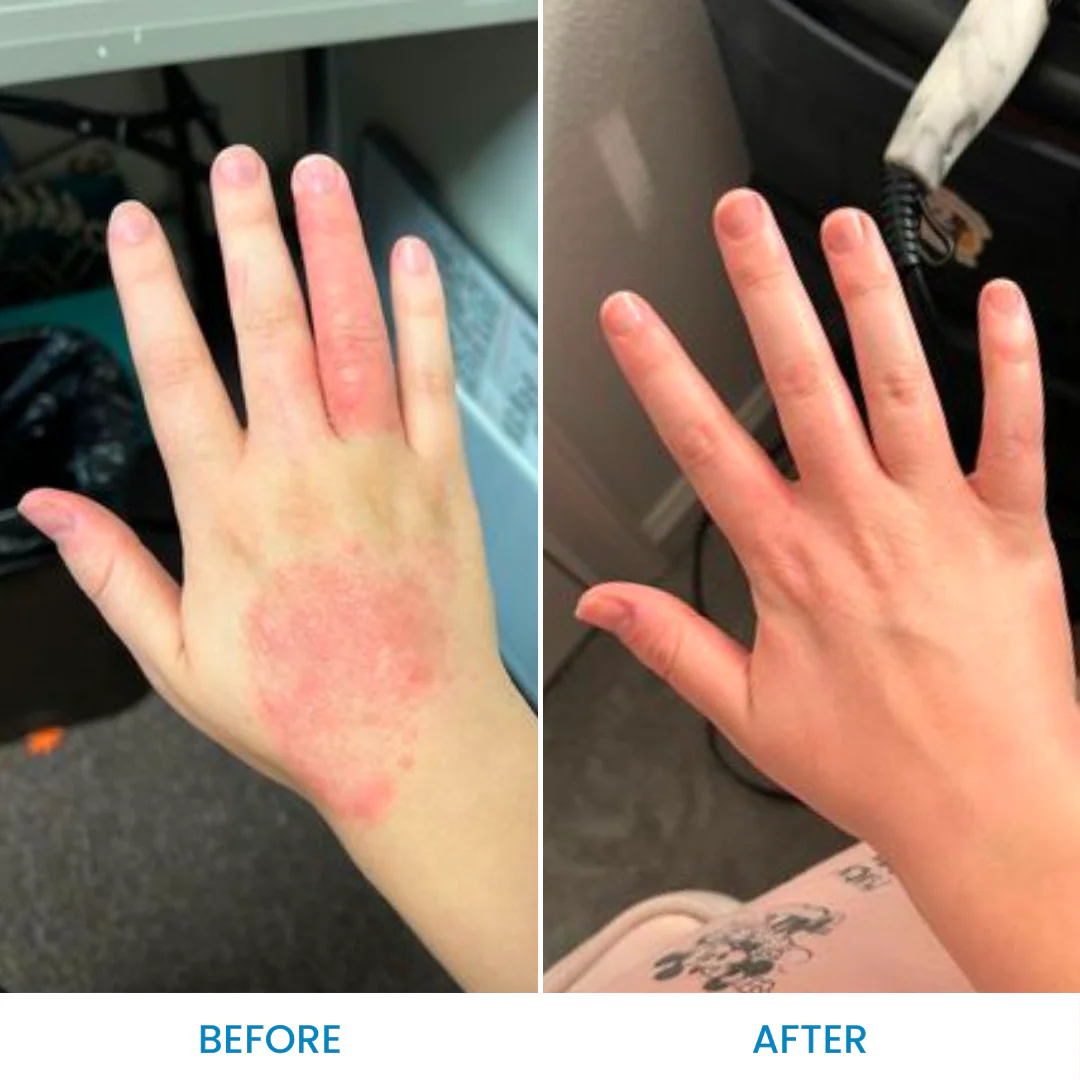 Reader Photo
Chronic hand eczema, consistent routine
Shared by a reader following a daily red light routine.
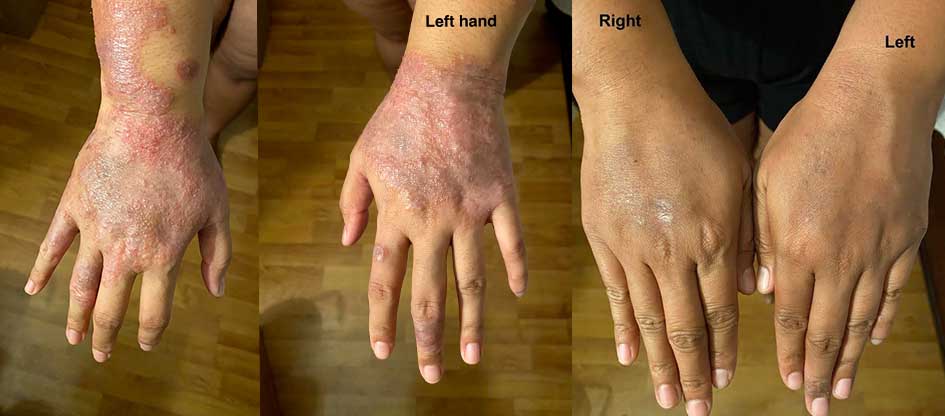 Reader Photo
Calmer, less inflamed skin
Another reader’s hands after adding RLT to their routine.
How could red light therapy help eczema?
Red light therapy is a form of photobiomodulation (PBM): specific wavelengths of red and near-infrared light are absorbed by the mitochondria in your cells (mainly cytochrome c oxidase), nudging them toward a lower-inflammation, higher-repair state. For eczema, there are three plausible ways it helps, mapping neatly onto the three problems above:
1. It calms inflammation
Red and near-infrared light appear to down-regulate pro-inflammatory signaling and reduce inflammatory cytokines. Notably, the strongest human eczema light study to date measured a drop in IL-31 (the itch cytokine) in treated skin (AD-Blue trial).
2. It helps rebuild the skin barrier
Red light reliably stimulates fibroblasts and keratinocytes, the cells that make collagen and other building blocks and drive skin repair, which is well established in wound-healing research (fibroblast study; mechanism review). A stronger barrier means less moisture loss and fewer triggers getting in.
3. It may reduce itch
By lowering local inflammatory and itch signaling, light therapy can help break the itch-scratch loop, often the single most disruptive part of living with eczema.
 Honest nuance: most of this mechanism data comes from lab, animal, and general skin-healing research, not from large eczema trials in people. The biology is encouraging, but “biologically plausible” is not the same as “clinically proven.”
What the research actually shows
This is where most eczema device pages exaggerate. Here’s the real state of the evidence.
Human studies (there aren’t many yet)
The AD-Blue randomized controlled trial (2023) is the strongest human study so far: 87 patients, double-blind, comparing 415 nm vs 450 nm blue light vs a sham, three times a week for eight weeks (Buhl et al., 2023; full paper). Results:
- 450 nm significantly reduced itch (Itch-VAS −1.6, p = 0.023 vs sham).
- 415 nm significantly reduced overall severity (PO-SCORAD −11.5, p = 0.028).
- Skin IL-31 dropped, with no concerning systemic immune changes.
Two honest caveats: this used blue light (not red/near-infrared), and the effects, while statistically significant, were modest: a helpful nudge, not dramatic clearance.
A small near-infrared (830 nm) LED study reported larger numbers: roughly a 79% reduction in itching and 71% improvement in skin eruption, with no side effects. It’s widely cited, but it’s a small, older study, so treat those percentages as encouraging rather than definitive.
Animal studies (more supportive, but still not people)
Multiple mouse studies using red and near-infrared wavelengths (630, 650, 660, 830, 850 nm) show reduced eczema-like lesions, lower IgE, and reductions in inflammatory cytokines and mast cells, often at low doses (about 2-8 J/cm²) (650 nm study). One even found curcumin + red LED beat light alone. Promising, but animal data doesn’t automatically translate to humans.
The 2025 evidence summary
A 2025 scoping review of non-UV light treatments for atopic dermatitis (Cespedes Zablah, Griffin & Lio) concluded that non-UV light therapy shows positive evidence of efficacy, but that studies are heterogeneous and limited, preventing firm meta-analysis-level conclusions (Dermatitis, 2025).
Red light vs UVB vs blue light: don’t confuse them
This trips a lot of people up:
| Light type | What it is | Role in eczema |
|---|---|---|
| Red / near-infrared (RLT) | 630-660 + 830-850 nm, non-UV | Gentle, at-home, low-risk adjunct; calms inflammation and supports barrier repair. Emerging evidence. |
| Narrowband UVB | 311-313 nm ultraviolet | The established, dermatologist-prescribed phototherapy for moderate-to-severe eczema, done in a clinic, under supervision. |
| Blue light | 415-450 nm | Some trial evidence for itch/severity (AD-Blue); may also influence skin bacteria. Still emerging. |
Narrowband UVB is a first-line phototherapy for moderate eczema in dermatology guidelines, though even there the evidence is rated low-to-moderate certainty (AAD, 2023). The key point: UVB is UV light and needs medical supervision; red light therapy is non-UV and safe at home, but it isn’t a like-for-like replacement for medical phototherapy.
 About the “blue light kills Staph and clears eczema” claim: blue light can affect skin bacteria, and S. aureus is a real flare driver, but using blue light to control it in eczema is an emerging, 2024-era research idea (microbiome review), not a settled clinical fact.
Wavelengths and dosing that matter
- Wavelengths: the most-studied useful range is red 630-660 nm (surface inflammation, barrier) plus near-infrared 830-850 nm (deeper, immune modulation). Blue (415-450 nm) is an option specifically for itch.
- Dose: for skin-level conditions, lower doses work better, generally around 8-10 J/cm² or less. Red light has a “biphasic” response, so more is not better.
- Consistency beats intensity. Short, regular sessions over weeks matter more than long, occasional blasts.
- You don’t need a huge panel to treat local eczema (hands, elbows, face): a handheld or small tabletop device is enough. Larger panels only make sense if you also want whole-body use.
How to use red light therapy for eczema at home
A simple, sensible starting protocol (always follow your specific device’s instructions):
- Clean, bare skin. No thick creams or makeup on the area during the session; moisturize after.
- Distance & time: follow the device’s guidance, typically a set distance for ~10 minutes per area. Start conservative.
- Frequency: daily or near-daily during a flare; a few times a week for maintenance.
- Moisturize right after with a fragrance-free, ceramide-based emollient to lock in the barrier benefit.
- Fix the basics too. Light works best alongside gentle cleansers and removing triggers (harsh soaps, fragrance, overheating, known allergens).
- Give it weeks, not days. Itch often eases first; visible skin changes take longer. Track progress with photos.
Editor’s Picks · 2026
Top 5 Red Light Devices for Eczema
We compared 18 brands against 14 eczema-specific criteria. These 5 deliver the wavelengths, coverage, and gentleness eczema-prone skin needs, each with full panel details.
| Device | Best For | Wavelengths | Starting Price |
|---|---|---|---|
| RLT Home TotalSpectrum 3.0 | Overall #1 for eczema | 7 (incl. blue) | $595 |
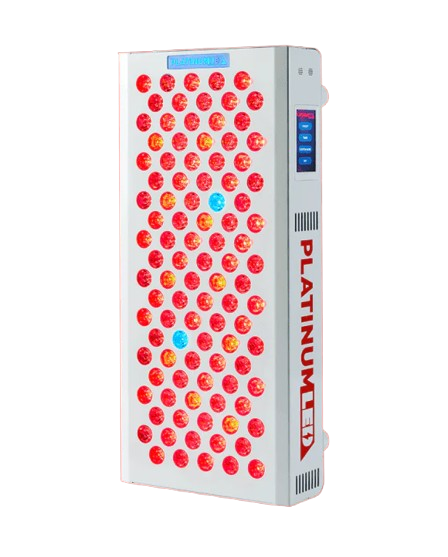
| Platinum LED BIOMAX | Whole-body coverage | 7 | $659 |
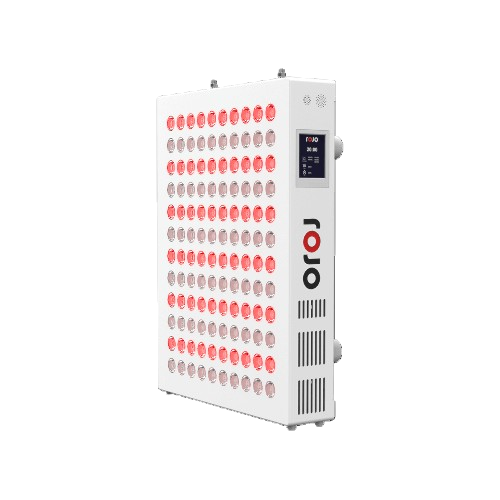
| Rojo Refine 3600 | App-controlled, smart | 5 | $1,295 |
| Helio Cure Glow | Gentlest, best for flares | 6 | $549 |
| Rouge Care Ultimate G4 | Pro-grade, most customizable | 8 | $645 |
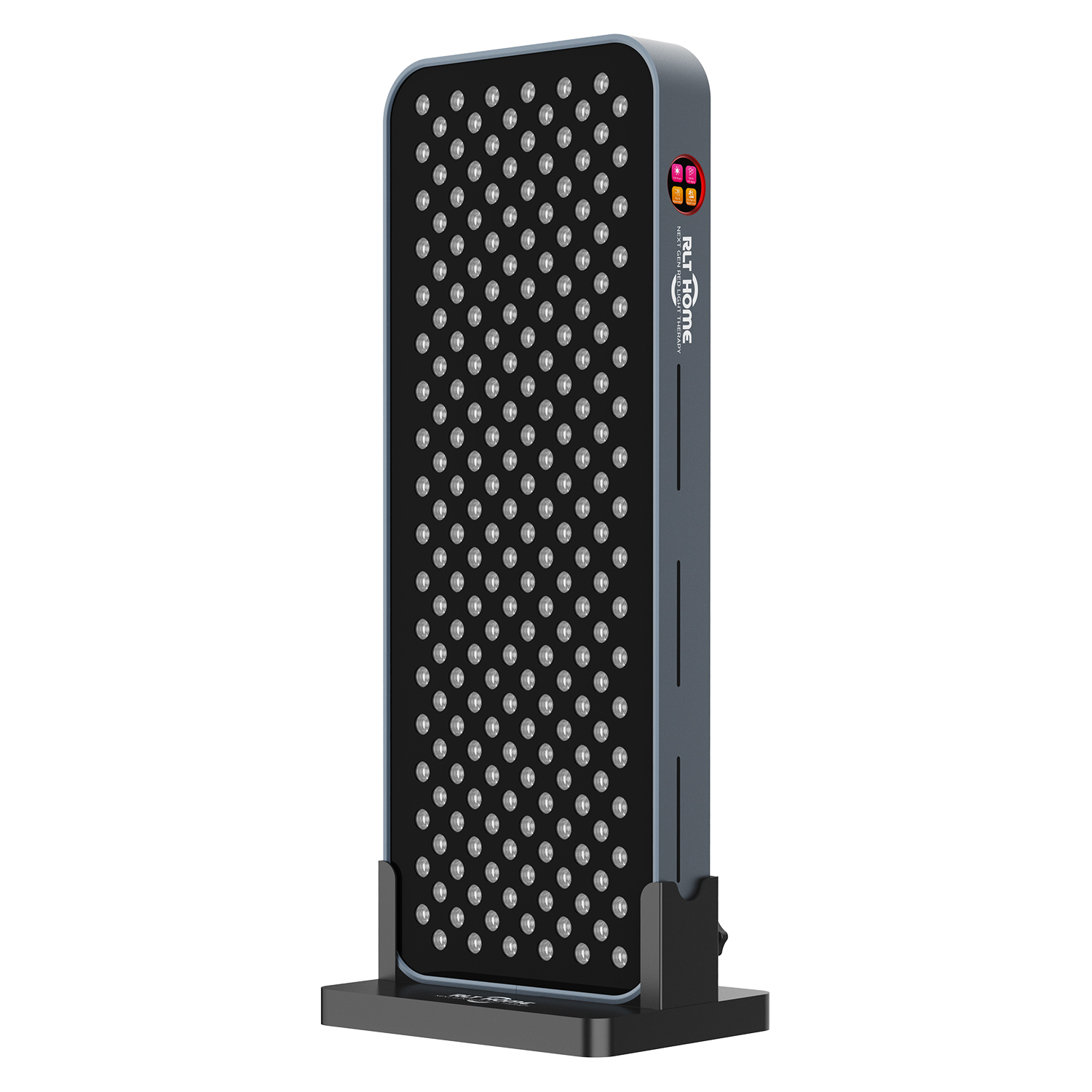
 ★ Editor’s Choice · #1 for Eczema
RLT Home TotalSpectrum 3.0
The only panel in our top 5 with dedicated blue light for surface bacteria alongside 660 nm for barrier repair and 830 nm for deeper immune modulation. One device covers the full eczema wavelength stack, with zero EMF for full-body sessions.
 #2 Best Coverage
Platinum LED BIOMAX
Excellent whole-body coverage for eczema spread across the arms, back, or legs. A trace blue wavelength is included alongside the core red and near-infrared output that reaches deeper inflamed tissue. The best pick if your eczema covers large areas.
 #3 Best Smart
Rojo Refine 3600
App-controlled protocols let you dial in a custom eczema routine, and the dedicated Inflammation mode targets the 660 nm + 830 nm stack that matters most for barrier repair. A great choice for beginners who want the app to guide their sessions.
 #4 Gentlest
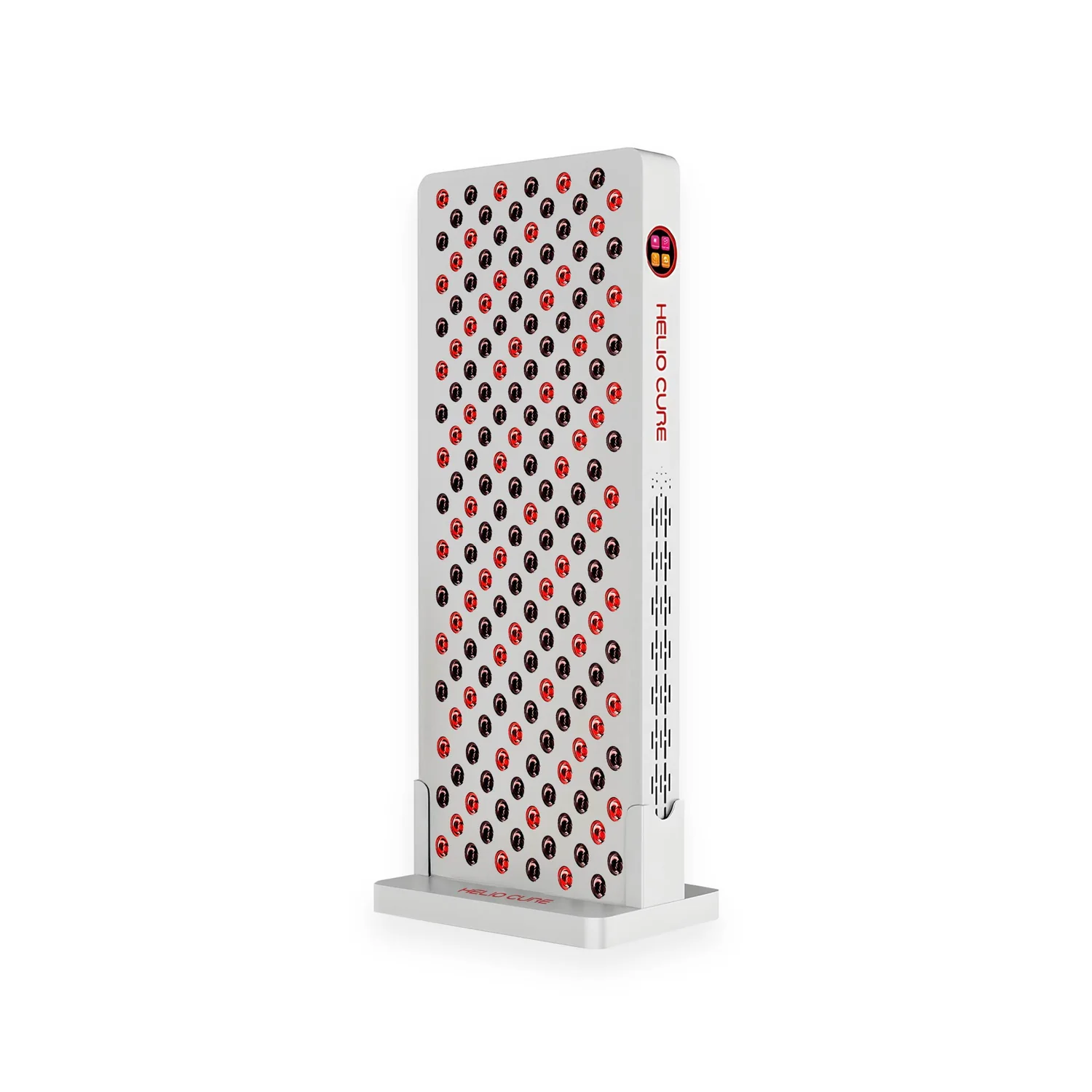
Helio Cure Glow
Lower, gentler irradiance is an advantage for severely flared or broken skin where high-intensity panels feel uncomfortable, while deep near-infrared reaches chronic, thickened plaques. Best for acute flares and sensitive eczema.
 #5 Pro Grade
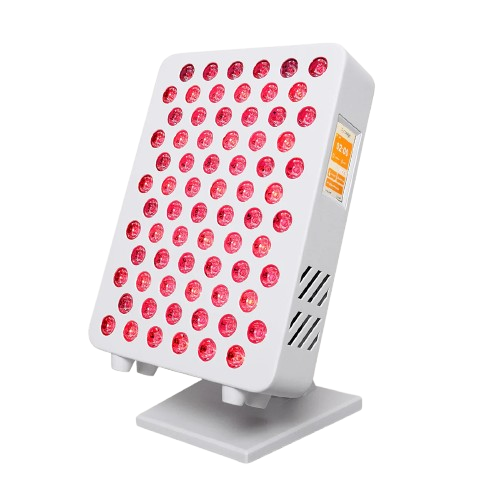
Rouge Care Ultimate G4
The widest wavelength range in our top 5, with individually dimmable channels so you can lower intensity on acutely inflamed skin and ramp up as tolerance builds. Best for severe, chronic eczema that needs maximum customisation.
Safety First
Safety & When Not to Use It
Red and near-infrared light has a strong safety profile: no skin thinning, no steroid rebound, and (unlike UV) no established skin-cancer risk. Still, keep these in mind.
 Good to know
- Wear the eye protection that comes with your device
- Brief extra itch or redness early on can be normal
- Moisturise within 5 minutes of finishing
- Give it 6-8 weeks of consistent use
 Be cautious / avoid if
- Skin is actively weeping, broken, or infected (treat first)
- You take photosensitising meds (e.g. isotretinoin, some antibiotics)
- You have a photosensitive condition such as lupus
- Your dermatologist advises against it
Common Questions
Red Light Therapy for Eczema FAQ
Does red light therapy actually work for eczema?
Is it the same as the UV light therapy dermatologists use?
Which wavelengths are best for eczema?
How long until I see results?
Can it replace my steroid cream or biologic?
Do I need an expensive full-body panel?
References
- Atopic dermatitis review: PubMed 38500882
- S. aureus in atopic dermatitis: PMC6658404
- AD-Blue randomized controlled trial (2023): PubMed 37814388 / full paper
- Scoping review of non-UV light for atopic dermatitis (2025): Dermatitis
- AAD guidelines: phototherapy for atopic dermatitis (2023): JAAD
- Red-light photobiomodulation mechanism review (2024): Frontiers in Photonics
- Human fibroblast response to red light: Scientific Reports
- 650 nm red light, atopic-dermatitis mouse model: PubMed 34584541
- Blue light and the cutaneous microbiome (2024): Frontiers
Thinking of trying red light therapy for your eczema?
Start with a device that matches your eczema type and budget. See our evidence-based Top 5, ranked for eczema-prone skin.